• Skip to primary navigation
  • Skip to main content

Santa Barbara Channelkeeper

Keeping Watch for Clean Water

  • About
    • Our Mission & Vision
    • Our Team
    • Our Boat
    • Our History
    • Our Impact
    • About the Santa Barbara Channel
    • About Local Watersheds
    • Strategic Framework
    • Financial Information
    • Careers
    • Contact Us
  • Our Work
    • Education
      • Student Art Show
    • Community Engagement
      • Cruise Ship Advocacy
      • Report Pollution
      • Volunteer
      • Water Conservation
      • Oil Spill Resource Guide
      • Film Plastic Recyling
      • Action Alerts
    • Field Work
      • Beach Water Quality
      • Stream Team
        • Water Quality Indicators
        • Stream Team Data Portal
        • Leydecker Archives
      • MPA Watch
      • Cruise Ship Monitoring
      • Ocean Acidification
    • Advocacy
      • Aquaculture Advocacy
      • Polluted Runoff
      • Agriculture
      • Oil & Gas
        • Protecting the Coast from Sable Offshore’s Pipeline Restart
        • Refugio Oil Spill
        • Oil Spill Resource Guide
        • Platform Decommissioning
        • Legacy Oil Wells
        • Offshore Fracking
      • Ventura River
      • Plastic
        • Film Plastic Recyling
      • Marine Protected Areas
        • MPA Watch
      • Water Supply
        • Desalination
        • Conservation
    • Enforcement
      • Ventura River
      • Offshore Fracking
      • Agriculture
      • Sewage
      • Ojai Quarry
      • Halaco
  • Media
    • Press Releases
    • Blog
    • Newsletter Archive
    • eNews Archive
    • Photo Gallery
    • Video Gallery
  • Take Action
    • Donate
    • Events
    • Volunteer
      • Watershed Brigade
      • MPA Watch
    • Report Pollution
    • Action Alerts
    • Subscribe to eNews
    • Shop
      • Buy Channelkeeper Gear
      • Shop & Support Channelkeeper
  • Donate

Outreach

Volunteer Spotlight: For Sue Sadler-Paré Cleaning up the Beach is Personal

December 13, 2021 by Santa Barbara Channelkeeper

Sue Sadler-Paré feels a profound connection to the ocean and she explains that she’s happiest when she’s in, on, or under the water. As often as she can, she heads to the beach to walk her dog, take in the beauty, or go for a swim. She’s always picked up trash along the way, but in the midst of the pandemic, she noticed an increased amount, so she started taking bags with her and picking up trash as she walked. 

“I didn’t quite get in the longer walks I had hoped for, but I felt it was more important for me to pick up the plastic cup that 500 people had just walked by. It was driving me crazy. I had to do something—and that motivated me to take action.”
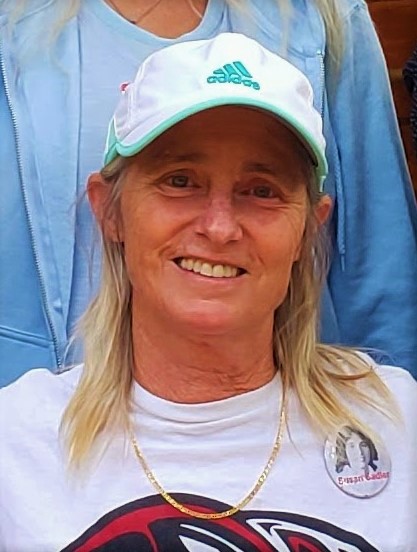
To date, Sue has collected more than 340 pounds of trash. She’s an extraordinary advocate for pollution prevention and a true watershed hero who makes fighting for the Earth and the environment her everyday goal.

Sue has always loved the ocean. She grew up in Laguna Beach, moved to the mountains of Big Bear for high school, was drawn back to the coast for college in Santa Barbara, and never left. Living by the water, she explains, was a high priority.

Her relationship with the ocean is intimate. As a diver, swimmer, and beach walker, she has had extraordinary aquatic experiences and felt nourished and cared for by the ocean throughout her life. So it’s no wonder that she feels very protective of the Channel. In fact, cleaning up trash along the water’s edge is almost a gesture of reciprocity and gratitude.

“The ocean has always been so good to me that it feels meaningful that I’m able to give back to her. I liken it to assisting my mother when she got older and couldn’t do things. I was able to help her out and feel like I was making a difference.”

Sue feels a strong sense of responsibility to clean up the beaches near her home, so she tends to focus on Haskell’s Beach and Goleta Beach, with occasional neighborhood cleanups around Calle Real and Fairview. She is 1000% committed to pollution prevention and does whatever it takes to remove litter from coastal areas and get the job done right. On more than one occasion, she has had to request outside assistance because the trash was more than she could handle on her own. Now that’s dedicated!

Several months ago, Sue recruited a friend to join her on cleanups and they’ve enjoyed spending extra time together outside laughing about the odd items that they discover while doing something positive for the environment. The duo recently cleaned up Fairview Avenue and stuffed Sue’s car with debris. They participate in Watershed Brigade cleanup events and appreciate the sense of camaraderie the Watershed Brigade provides and the knowledge that there are other like-minded folks who are out cleaning up our community. Plus, Sue explains, the challenges and prizes make it extra fun.
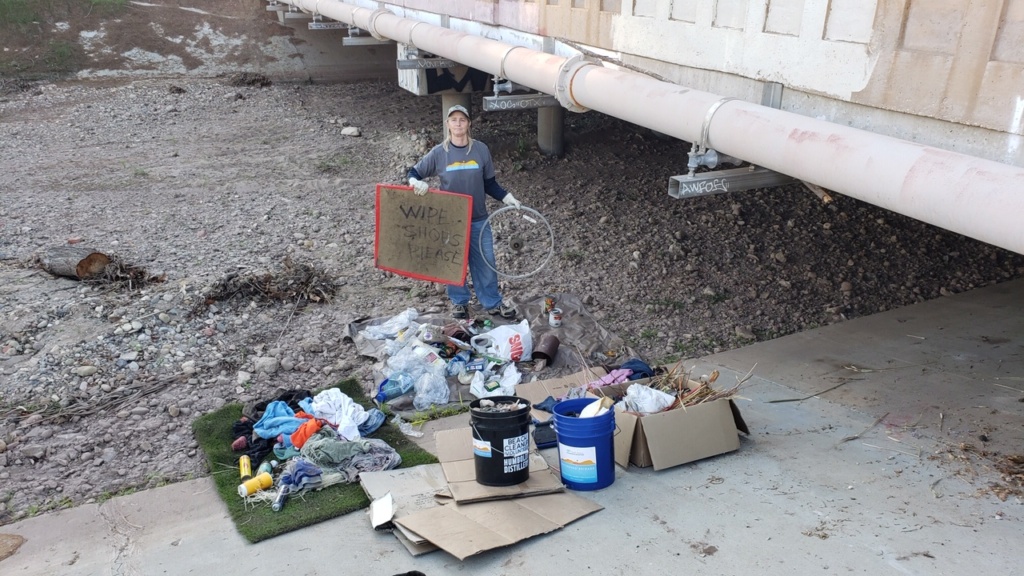
It’s Sue’s personal sense of responsibility for the environment and her commitment to act locally to reduce pollution that make her such an inspiring force for good.

“When I see trash on the beach and it may be seconds away from being washed into the ocean, I feel a sense of urgency,” she explains. “It’s become much more of an issue of ‘if not me, who?’ We know what’s going on with the climate crisis and ocean pollution, and it’s not going to get better if we don’t take action. There’s no way I’m going to look past that cigarette butt that’s sitting in the sand. They say if you’re not part of the solution, you’re part of the problem and that’s really resonated for me.”

We’re deeply grateful for heart-driven volunteers like Sue Sadler-Paré, who make it their mission to create a cleaner, healthier community. You inspire us every step of the way.
Filed Under: Outreach Tagged With: Cleanup, environment, ocean, pollution

Governor Newsom’s Drought Declaration Intensifies Water Conservation Measures

October 29, 2021 by Molly Troup

2021 is on track to be the driest year recorded in California since 1924. In October, Governor Gavin Newsom declared a drought emergency for the entire state of California, extending the declaration already active in 50 counties to the eight remaining counties—Los Angeles, Orange, Riverside, San Bernardino, San Diego, Imperial, San Francisco, and Ventura. Under the proclamation, water suppliers are asked to prepare for the possibility of another dry year ahead.  

“As the western U.S. faces a potential third year of drought, it’s critical that Californians across the state redouble our efforts to save water in every way possible,” Newsom said. 

What Does a State-Wide Declaration Mean?

The drought declaration authorizes California’s water regulators to ban wasteful water use such as spraying down public sidewalks or using potable water in decorative fountains and authorizes the Office of Emergency Services to provide assistance and funding under the California Disaster Assistance Act to support the emergency response and delivery of drinking water and water for public health and safety.

The declaration also requires municipalities to implement their water shortage contingency plans at “a level appropriate to local conditions that take into account the possibility of a third consecutive dry year.”

Currently, all water providers within Santa Barbara County are maintaining their water supply stages at either Stage I or Stage II. Water shortage contingency plans typically include a scale ranging from a normal supply stage with no water supply reductions to Stage 1 through IV or more, with corresponding water restrictions. Each stage defines actions that a municipality will take to address a supply shortage.

Local water agencies encourage community members to use water resources as efficiently as possible.

The City of Santa Barbara’s Enhanced Urban Water Management Plan outlines strategies for managing the City’s water supplies under drought conditions. City staff is currently using the plan to manage local water resources and guide decision-making. They will update the Water Commission and City Council on potential next steps in drought response during the spring of 2022.

Conservation is Key

Although the drought declaration does not include firm water conservation mandates for Californians, it sets the stage for water restrictions in the future. For now, citizens are asked to voluntarily reduce their water usage by 15% as compared to 2020. As the state enters a potential third year of drought, the need to intensify local water conservation efforts is clear.

The State Water Resources Control Board recently reported that on the Central Coast (which includes Santa Barbara), water consumption appears to be moving in the right direction, but more is needed—with urban water use 5.2% less than in August 2020. Ventura County (included in the South Coast region) used 3.1% less water than in August 2020. Because of the severity of the drought conditions and projections for a warmer and dryer La Niña winter, our community needs to do more to reach the conservation goal that the Governor has called for and to ensure that we make water conservation a way of life.  

What can you do?

Take your water conservation to the next level. Explore ways to use water more efficiently and further reduce your water consumption. Here are a few ways to intensify your water conservation efforts:

  1. Learn about easy ways to save water throughout your daily routines with better habits like turning the water off while brushing teeth, washing hands, or shaving and washing only full loads in the dishwasher or laundry machine. Set a timer to limit your shower to 5 minutes or less and recycle indoor water use on plants.
  2. Review your household water use with a water audit to see where you can effectively implement conservation measures.  
  3. Get a free water checkup for additional help with assessing water usage on your property and ways to save water and money on water bills. 
  4. Take a tour of your yard to determine how much water your landscaping really needs, where you can capture rain, disconnect downspouts, and reduce paved or compacted areas that prevent water from penetrating the soil. Check your sprinkler system for leaks and make other irrigation adjustments to stay on track with your water savings. Contact Channelkeeper to purchase a kit that converts a wine or beer barrel into a rain barrel.  
  5. Plant a water-wise organic garden and replace water-thirsty plants with drought-tolerant ones. Check for landscaping rebates to help make your yard or garden more water wise. 
  6. Check your local city for rebates that are offered for water conservation tools like the Flume Smart Home Water System, high efficiency washing machines, rain shut-off sensors, and much delivery.  
  7. Install a greywater harvesting system that diverts water from your washing machine (which would otherwise go to the sewage treatment plant) and reuses it to irrigate outdoor plants and trees. 

Filed Under: News, Outreach, Uncategorized Tagged With: California, drought, drought declaration, governor Newsom, water supply

Welcome Aboard, Ted!

July 21, 2021 by Santa Barbara Channelkeeper

We’re thrilled to welcome Ted Morton as Channelkeeper’s new Executive Director. 

Ted brings an impressive list of professional accomplishments and skills, as well as 25 years of experience in ocean conservation. 

Ted joins Channelkeeper from The Pew Charitable Trusts, where he directed the organization’s oceans’ programmatic work at the federal level. Prior to that, he directed a campaign to improve the international trade of coral reef wildlife at the Environmental Defense Fund and served as the vice president of organizational effectiveness and operations at SeaWeb. He’s extremely knowledgeable and passionate about environmental conservation and we’re thrilled to work with him to protect our coastal waters.

We took a moment recently to ask Ted a few questions about his interests, his background, and his enthusiasm for preserving the rich wildlife, ecosystems, and water quality in and around the Santa Barbara Channel.

1.       What makes you excited to work in our area?

Santa Barbara is such a special place. On a personal level, being involved in protecting the richness of the area–the waters, wildlife, the habitats–is very exciting to me. I’ve worked in ocean conservation for more than 25 years, but primarily in Washington D.C. on efforts to influence policy in agencies and on Capitol Hill. I’ve never had a daily, direct connection to what I was working to protect. It was distant. So being able to work in a community where I can see and appreciate what makes the area so special and the results of protection are really exciting to me. I look forward to helping monitor Goleta streams, joining public education efforts on the Channelkeeper’s boat, and advocating for a healthy, clean Channel, in addition to working with community members who are passionate about the place where we live and work. Channelkeeper does amazing work. I cannot wait to settle in, get started, and build on its record of accomplishments.

2. What are you most proud of? Is there an environmental accomplishment that stands out?

That would probably be the passage of the National Beach Bill. When I first started working at American Oceans Campaign in 1993, it was one of the first projects that were handed to me. It was, go out and build cosponsors. Get members of Congress to sign on saying that they support the bill and would like to see it move. It took time. We made changes. There was a significant public education effort and it involved leading a lot of advocates throughout the country and in Washington D.C. I was persistent in building up support for it and eventually, it did pass with solid bipartisan support in 2000. It was modeled on what California was doing, but took it to a national level. That’s the accomplishment that I’m most proud of because the passage of the National Beach Bill set federal standards for beach water testing protocols and practices.

3.       What’s your favorite aquatic pastime?

 I love to swim, kayak, snorkel and I enjoy walking along the beach early in the morning or late in the evening. I hope that I’ll find time to take on some new activities in the upcoming year like paddleboarding.

4.       Was there a defining moment in your childhood that led you to environmental work?

Yes. It was in college, actually, when I helped form the environmental club at Furman University. I also did an internship during my junior year with the National Audubon Society. I spent 10 weeks in Washington D.C. My supervisor was moving from Utah and didn’t give me enough work to do during the first two weeks so I went up and down the hall and gathered assignments from many different programs, from grassroots volunteer initiatives and endangered species policy to data input on ancient forests in the Pacific Northwest. That was a defining moment that launched me into environmental policy as a career path.

But if you asked my mother, she would tell you that I’ve always been an environmental advocate and that I was really into recycling when I was in elementary school. 

5.       If you were a marine organism what would you be and why?

I would be a large pelagic fish like a bluefin tuna or a swordfish because they travel long distances and I really enjoy travel. They are also pretty charismatic, fast swimmers, and high up on the food chain.

6.       Do you believe that local actions can have a larger global impact?

Absolutely. Local actions show that change is possible and they can inspire people in other places as well. Today, with the internet and social media, we have platforms that allow us to learn about what people are doing all across the world. A local initiative can create meaningful change that can have far-reaching influence. And when other communities implement the same change, it can help inform policy, so that changes can become standard in other areas throughout a county, region, or nation.

If you would like to connect with Ted to personally welcome him, you can reach him at Ted@sbck.org.

Filed Under: News, Outreach, Press Release, Uncategorized Tagged With: Channelkeeper, Executive Director, Marine Conservation

Santa Barbara Channelkeeper’s Plastic Film Festival

May 20, 2021 by Santa Barbara Channelkeeper

Watch, Learn & Take Action

Plastic pollution is a mounting global concern, and it has significant impacts locally, which is why reducing single-use plastic continues to be a major focus of Channelkeeper’s work.  In an effort to help educate and inspire our community, we’ve compiled a list of seven informative films about plastic that are available to stream online. It’s the perfect opportunity to host a documentary film festival in the comfort of your home.

People often think of plastic pollution as litter. However, plastic pollution is more than the clutter of single-use items that wash down storm drains and collect on our beaches. Plastic has severe consequences throughout its lifecycle. From oil drilling and refining to plastic production and waste, every stage is detrimental to human health, and these harmful processes have created a social justice crisis, since the most vulnerable communities are often disproportionately affected.   

Plastics are poisoning our bodies through the air we breathe, the water we drink, and the food we eat. Recent studies show that on average, each of us consumes a credit-card-sized amount of microplastics every week, which can carry toxic chemicals such as carcinogens and endocrine disrupters.  

Plastic is also a contributor to climate change. More than 99% of plastic is made from fossil fuels. Today, about 4-8% of annual global oil consumption is associated with plastics, according to the World Economic Forum. Plastic production is expected to more than double over the next three decades. If this reliance on plastics persists, plastics will account for 20% of oil consumption by 2050.  

Channelkeeper continues to work locally to educate the community about the impacts of single-use plastic and ways to reduce its use, while also continuing to advocate for local policies to reduce single-use plastic and helping to set an example for the state. With studies predicting that plastic pollution in the ocean will likely triple over the next decade, we recognize the urgency of taking immediate action to address this crisis. 

We invite you to watch these films, discuss them–and then join us in taking action.

A Plastic Ocean  (1hr 42m)
Available on: Netflix or Amazon
This 2016 documentary follows a team of scientists and researchers as well as record-breaking freediver and activist Tanya Streeter, as they travel to 20 different locations across the globe. Directed by journalist Craig Leeson, the film juxtaposes beautiful shots of the ocean with contrasting views of polluted cities and landfills teeming with rubbish. The film reveals how plastic in the ocean gets mistaken for food by marine animals, and goes on to harm organisms all the way up the food chain, including humans. 

Frontline’s Plastic Wars (54m)
Stream on PBS
FRONTLINE and NPR team up to investigate the surge of plastic waste in the environment. Plastic Wars reveals how plastic makers have publicly promoted recycling for decades, despite privately expressing doubts that widespread plastic recycling would ever be economically viable.

Inside the Garbage of the World (54m)
Available on: Amazon Prime
This film explores the plastic island in the Pacific and reveals that the situation is actually more dire than anyone anticipated. Directors Philippe and Maxine Carillo evoke a sense of urgency in changing our behavior in order to preserve our planet and our way of life. 

Microplastic Madness  (1hr 16m)
Vimeo Trailer / Available on YouTube
Told from a child’s perspective, this film follows 56 fifth graders from Brooklyn as they investigate plastic pollution in their community. They collect data which they use to inform policy and set out to rid their cafeteria of all plastic.

Plastic China (1 hr, 22 m)
Available on: Amazon Prime
This film relates the story of people in China who live surrounded by plastic. Tons and tons of plastic are exported to China to be recycled and manufactured into something new. Yi-Jie is an 11-year-old girl whose family lives in one of these waste workshops. Plastic China shows the price that living and working under these circumstances has on their health and way of life.

Plastic Paradise (57m)
Available for rent on Amazon
This film takes us to Midway Atoll, an unincorporated territory of the US off Hawaii, and the site of the Battle of Midway during WWII. In the middle of the Pacific Ocean with no civilization nearby, the atoll has become a collection site for the waste of the world. Brought in by the currents and tides, the atoll is littered with a massive amount of plastic and garbage that is degrading the paradise which surrounds it, which has become the case all over the Pacific, leading it to be dubbed the Great Pacific Garbage Patch. Journalist Angela Sun narrates, writes, and directs the film, interviewing a variety of ocean experts, scientists, and advocates.

The Story of Plastic (1hr 35m)
Available on: DiscoveryGo or for rent on Amazon 
With powerful insight, this eye-opening film provides a comprehensive look at the global plastic pollution crisis and the ways in which the oil and gas industry has manipulated the narrative around it. The film highlights the fact that, as consumers, our everyday choices add up. 

Filed Under: Education, Marine Conservation, Outreach Tagged With: marine debris, microplastic, plastic

The 411 on Film Plastic Recycling in Santa Barbara

July 6, 2020 by Santa Barbara Channelkeeper

Plastic film – also known as plastic film packaging – is soft, lightweight polyethylene packaging used for grocery, bread, zip-lock, and dry-cleaning bags. It’s also used as a wrapper around products such as paper plates, napkins, bathroom tissue, and diapers.

Many recyclers don’t accept film plastics because the material is often contaminated or torn in the recycling bin, thereby losing its value. Film plastics such as plastic bags also tend to jam up sorting conveyor belts at recycling facilities, causing the machines to be shut down.

However, Santa Barbara has a vibrant film plastics recycling program that was launched by Sasha Ablitt, owner of Ablitt’s Fine Cleaners. After taking over her family’s dry-cleaning business, Ablitt noticed the mounting plastic waste that the company was generating from single-use garment bags, and she was determined  to find a more environmentally friendly solution. She discovered a handful of companies that accept bags and convert them into plastic pellets. She began gathering film plastic and purchased a machine to bale and compress it before sending on for recycling. The film plastic is picked up by a company called Trex, that melts it down and mixes it with virgin plastic to create home and garden products, including outdoor decking materials.

In 2018, after several years of recycling her business’s film plastic, Ablitt realized the program could also serve as a collection site for the public. Santa Barbara Channelkeeper and the Community Environmental Council (CEC) partnered with Ablitt’s Fine Cleaners to provide additional support and create more public drop off centers. Channelkeeper and CEC—with the help of volunteers—hand-sort the plastic and perform quality control checks to ensure that the materials are high-quality and able to be recycled.  Since this program became open to the public, 12,000 pounds of film plastic have been recycled.

At the onset of the COVID-19 outbreak, the film plastic recycling project was temporarily suspended.  However, as businesses began to re-open so did the film plastic project, but on an appointment-only basis. Drop off centers at Santa Barbara Channelkeeper and CEC offices as well as at Ablitt’s Fine Cleaners are again accepting film plastic for recycling. Ablitt’s is hosting film plastic drop off events that you can register for by signing up to be on their film plastic email list. CEC and Channelkeeper serve as additional drop off locations and are available by appointment only. More information for CEC and Ablitt’s drop offs is available on their websites. To set up an appointment for drop off at Channelkeeper’s office send us an email at Penny@sbck.org.

From now on, there will also be training requirements to participate in the program, in order to avoid sorting errors and contamination issues. Community members will now have to sort their own film plastic with a trained volunteer or staff person, and will have to take home any plastic waste that is not accepted for recycling. We greatly appreciate everyone’s efforts to recycle and your commitment to doing it properly.

What you can recycle:

  • Retail, carryout, newspaper, dry cleaning bags (clean, dry, and free of receipts and clothes hangers)
  • Bread bags or tortilla bags turned INSIDE OUT and shaken free of crumbs
  • Plastic shipping envelopes (remove labels/tape as best you can), bubble wrap, and air pillows (deflate)
  • Product wrap on cases of water/soda bottles, paper towels, napkins, disposable cups, bathroom tissue, diapers, and female sanitary products
  • Furniture and electronic wrap
  • Film plastics with a recycle number 2 and 4
  • White Amazon mailers
  • Clean ziplock bags (remove zipper tabs)

    PRO TIP: If the plastic stretches with your thumb and rips in a jagged edge, it is recyclable. If it crinkles and rips straight, it is not recyclable.

Another tip that a community member shared with us that has helped with the sorting is to keep plastic that you weren’t sure if it is accepted in a separate bag from all the good clean and dry film plastic.


**April 2021** Channelkeeper has resumed film plastic collection at our office.

Please note that all drop off locations are now available by appointment only. Please email Penny@sbck.org if you would like to schedule a drop-off at Channelkeeper’s office. To sign up to receive info about film plastic collection events at Ablitt’s, please visit https://ablitts.com/filmplastic/. We are also asking community members to come prepared to sort their own film plastic with a staff or trained volunteer and to take home any plastic not accepted.


Filed Under: News, Outreach, Uncategorized

  • « Go to Previous Page
  • Page 1
  • Page 2
  • Page 3
  • Go to Next Page »

Contact Us

714 Bond Avenue
Santa Barbara, CA 93103
info@sbck.org
(805) 563-3377

Subscribe to eNews

© 2026 Santa Barbara Channelkeeper | Website by Mission Web Marketing
NAVIGATION
  • About
    • Our Mission & Vision
    • Our Team
    • Our Boat
    • Our History
    • Our Impact
    • About the Santa Barbara Channel
    • About Local Watersheds
    • Strategic Framework
    • Financial Information
    • Careers
    • Contact Us
  • Our Work
    • Education
      • Student Art Show
    • Community Engagement
      • Cruise Ship Advocacy
      • Report Pollution
      • Volunteer
      • Water Conservation
      • Oil Spill Resource Guide
      • Film Plastic Recyling
      • Action Alerts
    • Field Work
      • Beach Water Quality
      • Stream Team
        • Water Quality Indicators
        • Stream Team Data Portal
        • Leydecker Archives
      • MPA Watch
      • Cruise Ship Monitoring
      • Ocean Acidification
    • Advocacy
      • Aquaculture Advocacy
      • Polluted Runoff
      • Agriculture
      • Oil & Gas
        • Protecting the Coast from Sable Offshore’s Pipeline Restart
        • Refugio Oil Spill
        • Oil Spill Resource Guide
        • Platform Decommissioning
        • Legacy Oil Wells
        • Offshore Fracking
      • Ventura River
      • Plastic
        • Film Plastic Recyling
      • Marine Protected Areas
        • MPA Watch
      • Water Supply
        • Desalination
        • Conservation
    • Enforcement
      • Ventura River
      • Offshore Fracking
      • Agriculture
      • Sewage
      • Ojai Quarry
      • Halaco
  • Media
    • Press Releases
    • Blog
    • Newsletter Archive
    • eNews Archive
    • Photo Gallery
    • Video Gallery
  • Take Action
    • Donate
    • Events
    • Volunteer
      • Watershed Brigade
      • MPA Watch
    • Report Pollution
    • Action Alerts
    • Subscribe to eNews
    • Shop
      • Buy Channelkeeper Gear
      • Shop & Support Channelkeeper
  • Donate